Back

Digital Product Passport

Digital Product Identity vs Digital Product Passport: What's the Difference?

Eugenia Vitali


13 Oct 2026

qr code

 Digital Product Passport (DPP) is a set of product information that EU regulation requires to be accessible through a data carrier on the product. Digital product identity is the unique identifier, secure carrier and item record that a passport can be served from. Identity also supports authentication, traceability and ownership, which the passport doesn’t require.

In most organisations, the Digital Product Passport arrives through the compliance or sustainability team, and digital product identity arrives through brand protection, supply chain or digital. They’re scoped separately, budgeted separately, and often bought from different vendors. Both teams then put something on the product, and both build a record of it.

The two are related but not the same. The passport is a regulated output: a defined set of information that must be accessible to defined audiences. Product identity is infrastructure: the identifier, carrier and record that a passport can be served from, and that also supports authentication, traceability and ownership. This comparison sets out where they overlap, where they differ, and how to sequence them.

The distinction matters most for premium goods. Clothing, footwear and leather goods accounted for 62% of seized counterfeits in the most recent OECD/EUIPO study, and fashion is among the first product groups in the EU’s passport working plan. For those brands, a passport that can’t prove authenticity solves half the problem on the same products.

Side by side

The simplest way to hold the difference: the passport answers questions about the product, and identity answers questions about the item. ‘What is this jacket made of, and how do I repair it?’ is a passport question. The answer is the same for every jacket of that model. ‘Is this jacket genuine, where was it sold, and who owned it before me?’ is an identity question. The answer is different for every single unit.

Both rely on something physical on the product that a phone can read, which is why they’re so often confused. But they were designed for different purposes, by different people, and they’re judged on different outcomes.

Digital product identity Digital Product Passport
What it is Infrastructure: identifier, carrier, record A regulated information set and access model
Driven by Business need: protection, traceability, engagement ESPR and product-specific EU regulation
Granularity Usually item-level Model, batch or item, set per product group
Must prove authenticity? Yes, if built for authentication Not required
Records events after sale? Yes: scans, transfers, resale Not required beyond specified updates
Audience Brand, partners, consumers, resellers Consumers, authorities, recyclers, repairers
Deadline None. Starts when you need it Set by delegated acts per product group
The row that causes the most confusion is granularity. ESPR leaves it to each delegated act to decide whether a passport is per model, per batch or per item. Many brands read ‘model level’ as the end of the decision. For the passport it may be. For identity, it isn’t: anything you want to do with a specific unit (authenticate it, find where it went, transfer its ownership) needs item level.

Where they overlap

Both need a unique identifier, a data carrier on the product, and a record that can be resolved from that carrier. That shared core is why a brand with product identity in place is most of the way to a passport: the passport becomes a view on data the brand already holds, with access rights attached.

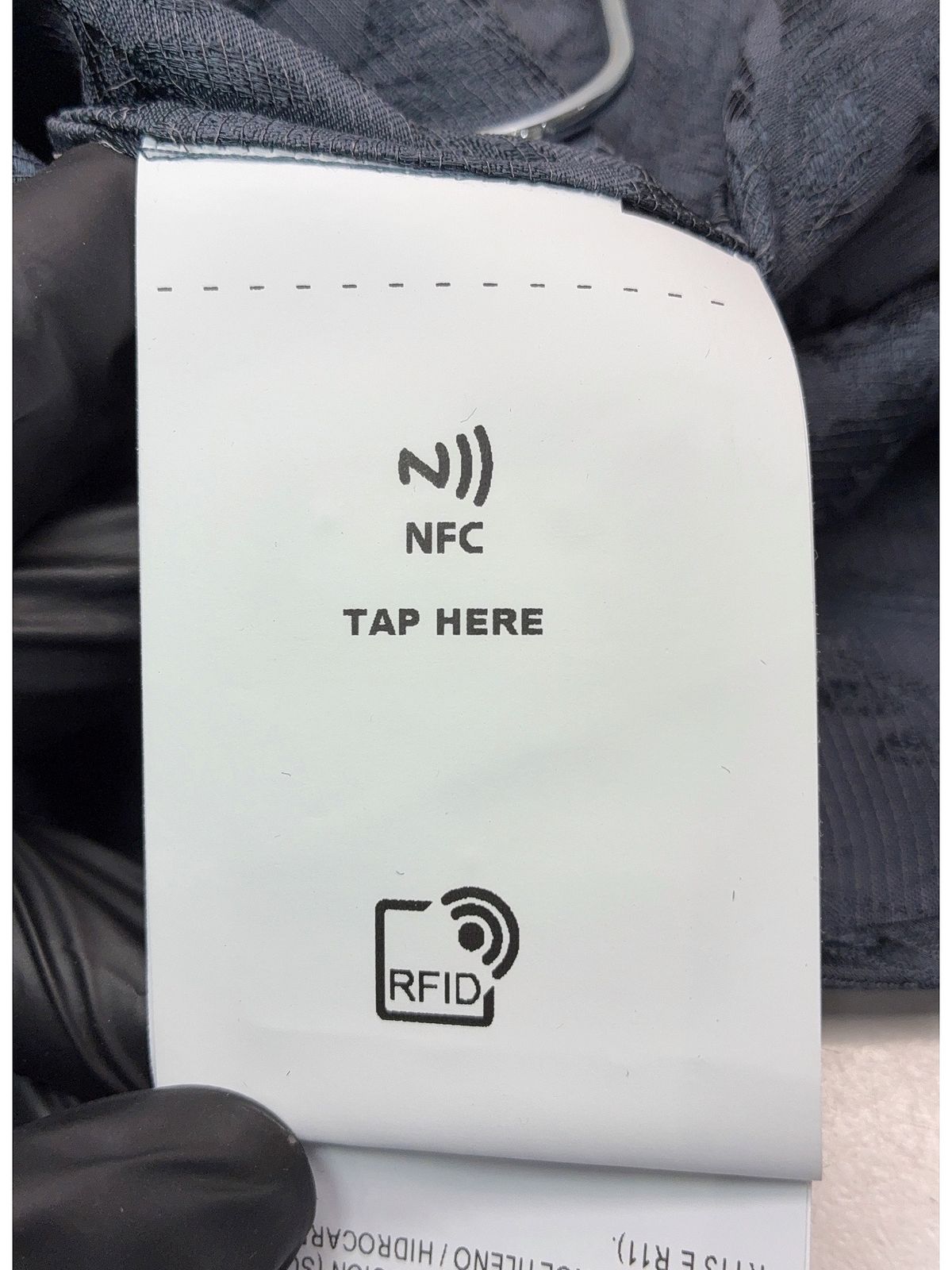
In 2026 the EU recognised NFC as a compliant DPP data carrier (Implementing Decision (EU) 2026/1736, referencing EN 18220). An NFC tag deployed for authentication can therefore carry the passport link as well. One tag, one identity, two uses.

The overlap is also where cost sits. The carrier is the most expensive per-unit element, and application on the line is the most disruptive. Doing either twice, once for the passport and once for identity, is where separate projects waste money.

In practice the overlap plays out at the moment of the scan. A consumer taps or photographs the code on a product. The same address can open a page with materials, care and repair information (the passport view), confirm that the item is genuine (the identity view), and offer registration or ownership transfer. Which of these appears, and to whom, is decided by the platform behind the identifier, not by printing different codes for different purposes.

A repairer scanning the same item years later can see disassembly guidance and the item’s own service history. A market surveillance officer can see compliance information that isn’t public. The brand’s own teams see everything. One identity, several audiences, each with the access the regulation and the brand allow.

Which carrier for which job: QR for access, NFC for trust

ESPR is carrier-neutral in principle. In 2026 the EU formally recognised NFC as a compliant data carrier (Implementing Decision (EU) 2026/1736, referencing EN 18220), and a GS1 Digital Link QR is a common visible carrier for passport access. The two do different jobs, and a premium programme often uses both on one identity.

GS1 Digital Link QR Cryptographic NFC
Passport access Yes, any camera Yes, any recent phone, no app
Proves the item is genuine No; a printed code can be copied unless it carries a copy-detection feature Yes; a new signed message on every tap, verified server-side
Tamper evidence No Yes, with the TagTamper variant
Indicative unit cost Near-zero marginal print cost About USD 0.45–0.65 at five-figure volumes (public catalogues, 2026)
Best for Model or batch passports, low unit values, high line speeds Item-level passports on goods exposed to counterfeiting, refill or resale
The trap is choosing the passport carrier on cost alone and discovering later that the same products need authentication. Printed codes with physical copy detection, such as ACM-secured barcodes and Diamond Dust, sit between the two: they keep print economics and add copy resistance.

Same identity, different audiences

Running both on one identity works because the audiences and their access rights are different. The resolver decides who sees what.

Audience Via the passport Via product identity
Consumer Materials, care, repair, end of life Authenticity result, provenance, registration, ownership
Repairer Disassembly and parts information Service history of this specific item
Recycler Material composition, sorting instructions (Usually nothing further)
Market surveillance Compliance data, operator information Authenticity on request
Brand operations Passport content management Full record: events, market, scans, ownership

This is why a single carrier can serve both without exposing commercially sensitive information. The consumer and the recycler get the regulated view; the brand’s operations teams get the full record behind authentication.

Where they differ, and why it matters

The second column is real work, and What Data Should Go Into a Digital Product Passport? covers it. But the first column is the one brands discover late: a passport-only project produces a compliant label and no operational value.

There’s a third difference that’s easy to miss: time horizon. A passport has to remain accessible for the product’s expected lifetime, as defined by the regulation. An identity programme typically wants to stay connected even longer, through resale and repair. Both point to the same conclusion: the carrier must be durable, on the product, and resolve through a domain the brand will still control in ten years.

The asymmetry matters for planning. A brand that builds identity first can add the passport later by adding content and access rules; nothing physical changes. A brand that builds the passport first on a printed, model-level code has to change what’s on the product to add identity. Physical changes are the expensive ones: new carriers, new tooling, new line integration, and a long tail of old products in market that will never be updated.

A passport alone won't

  • Tell you whether the item is genuine. A passport link on a copyable QR code can be copied with the product it describes.
  • Show where the item went after it left your warehouse.
  • Support resale, ownership transfer or warranty by unit.
  • Exist before your product group’s delegated act requires it.

Identity alone won't

  • Make you compliant. Passport content, access rights and registry obligations are specific requirements.
  • Define what sustainability data you must publish.
  • Replace the data collection from suppliers that the passport needs.

The regulatory timeline brands are working to

Milestone What it means Timing
ESPR in force (Regulation (EU) 2024/1781) Framework for passport requirements Since July 2024
EU DPP registry Central registry of passport identifiers Live since 20 July 2026
NFC recognised as a data carrier Implementing Decision (EU) 2026/1736, EN 18220 2026
Textiles delegated act Passport requirements for apparel and textiles Expected indicatively in 2027; obligations around 18 months after entry into force
Battery passport Under the Battery Regulation From 18 February 2027
AGEC (France) Product information accessible to French consumers In force since 2020 law; digital carriers are the practical route

Product identity has no deadline, because nothing requires it. That’s exactly why it tends to be designed last, under a passport deadline, for the minimum the regulation needs. Brands with counterfeiting or resale exposure have reason to set identity foundations before their product group’s act arrives.

The risk of building them separately

Both scenarios come from the same root cause: the passport and the identity were scoped by different teams who never compared notes. Neither team made a bad decision on its own terms. Together, they made an expensive one.

Two tags, one product

Threat
Compliance team adds a printed DPP code; brand protection already uses NFC.
Mechanism
Two identities, two records, nothing reconciles them.
Outcome
Double cost, and consumers don’t know which to scan.

A passport on a copyable carrier

Threat
Counterfeiters reproduce the printed passport code on fakes.
Mechanism
The fake now resolves to genuine passport data.
Outcome
The passport lends credibility to the counterfeit.

What it costs to build them twice

The expensive parts of both programmes are the same: the carrier on every unit, applying it on the line, serialisation, and the integration that gives each item an intended market. Building a passport and an identity programme separately pays for these twice and produces two records that never agree.

Cost line Separate projects One identity
Carrier per unit Paid twice (e.g. printed DPP code plus NFC) Paid once, or two carriers on one identity
Line application Two changes to packaging or production One
Serialisation and data Two identifier schemes One GS1 scheme
Platform Passport tool plus authentication platform One record, several views
Consumer experience Two scans, two pages, confused consumers One tap, the right view for each audience

What this looks like, per category

Scenario Threat Mechanism Outcome
Fashion house, textiles in early DPP scope Passport obligation approaching, counterfeiting and resale exposure today. Build item-level identity on woven or care-label NFC; serve the passport from it. One carrier, compliance and protection together.
Spirits group, outside ESPR for the liquid Refill fraud and diversion; no ESPR passport for the beverage itself. Product identity for protection and traceability; passport capability ready if packaging or components require it. No compliance project needed to justify the programme.
Beauty brand, not in early priority groups Grey market in key markets; DPP timing uncertain. Identity built to GS1 standards, with passport data structure prepared. Identity pays now; passport becomes an extension.

Which to build first

If your product group has no passport deadline yet, build identity for the business case you have today (authentication, diversion, resale) and design it to standards so the passport is an extension later. If you face a near deadline, build the passport on an identity layer from day one: same cost of carrier and integration, far more value.

The full picture of identity is in Digital Product Identity: What It Is and Why It Matters; the regulation side is in What Is a Digital Product Passport? And Why the Answer Depends on Who You Ask.

Whichever path applies, three decisions should be made jointly by compliance, operations, brand protection and digital before anything is printed or encoded: the level of identity (model, batch or item), the carrier and where it sits on the product, and the domain every identifier will point to. Everything else, including passport content, can evolve. Those three can’t.

Key takeaways

  • The DPP is regulated product information. Product identity is the infrastructure it can be served from.
  • Both need a unique identifier, a data carrier and a record. That shared core is where duplication wastes money.
  • A passport alone doesn’t prove authenticity or track diversion; identity alone doesn’t make you compliant.
  • One carrier can serve both, with the resolver giving each audience its own view.
  • Build identity to standards now; add the passport as a view when your product group requires it.
  • Use QR for passport access and NFC (or copy-resistant print) as the trust layer, both on one identity.

How Selinko approaches identity and the digital product passport

Selinko, part of TOPPAN, builds item-level identity that serves authentication, traceability, ownership and the Digital Product Passport from one record. Because our portfolio spans NFC, secure QR, RFID, ACM-secured barcodes and Diamond Dust, we can combine a visible passport carrier with a trust layer on the same item, rather than forcing one technology.

  • SelinkoTrack holds the item record and serves each audience its view: passport data, authenticity result, ownership certificate.
  • ILM Station commissions items on the line, so every unit leaves with a working, registered identity.
  • Ownership Certificates and grey market detection run on the same identity as the passport, not on a second tag.

FAQs

Is a Digital Product Passport the same as digital product identity?

No. The passport is a regulated set of product information accessible through a data carrier. Digital product identity is the unique identifier, secure carrier and item record that the passport can be served from, and it also supports authentication and traceability.

Can one NFC tag serve both authentication and the DPP?

Yes. The EU recognised NFC as a compliant DPP data carrier in 2026. A cryptographic NFC tag can authenticate the item and resolve to its passport data from the same identity.

Does a Digital Product Passport prove a product is authentic?

Not by itself. The regulation doesn’t require anti-counterfeiting. A passport on a copyable carrier, such as a plain printed QR code, can be reproduced on fakes.

Should we build the DPP or product identity first?

Build identity to standards for today’s business case, and serve the passport from it when your product group requires one. If a deadline is close, build the passport on an identity layer from the start.

Which data carrier should a Digital Product Passport use?

ESPR is carrier-neutral in principle. GS1 Digital Link QR is a common visible carrier, and NFC was formally recognised as compliant in 2026. Where products also need authentication, NFC or a copy-resistant printed code can carry the passport and prove the item is genuine.

When do brands need a Digital Product Passport?

It depends on the product group. The registry went live on 20 July 2026, textiles requirements are expected indicatively from 2027, and battery passports apply from 18 February 2027. Product identity has no deadline, but setting it up first avoids rebuilding later.

Is it cheaper to build the DPP and product identity together?

Usually. The carrier, line application, serialisation and integration are shared costs. Building them separately pays for those twice and creates two records of the same item.

Get in Touch

Blog

Discover more articles

All our articles